


Views: 0 Author: Site Editor Publish Time: 2026-10-10 Origin: Site

Developing reliable cold-weather hunting gear requires more than adding insulation. Low temperatures, moisture, and prolonged outdoor use place extra demands on material durability, hardware performance, and product construction. For outdoor brands, details such as cold-resistant fabrics, quiet designs, and durable heated accessories can make a significant difference in product quality. From material selection to the development of heated hunting seat cushions, choosing the right OEM solutions helps brands create functional winter hunting products tailored to demanding outdoor conditions.
Cold-weather hunting often involves extended periods outdoors, placing unique demands on outdoor gear. At the factory level, standard synthetic fabrics and plastic hardware that perform well in temperate climates can stiffen, become brittle, or shatter in freezing temperatures.
Evaluating Cold-Crack Resistance
When specifying fabrics for freezing conditions, product developers should evaluate the low-temperature flexibility of coated materials. Rather than relying on a coating name alone (such as assuming any TPU will outperform any PVC), buyers should review specific material formulations. Material specifications and physical sample testing should confirm that the chosen backing or coating remains pliable at the intended operating temperature.
Glove-Friendly Hardware
Winter hunters operate in thick, insulated gloves. If a backpack or garment cannot be easily adjusted or opened with gloves on, the design creates unnecessary friction in the field. OEM specifications should account for restricted fine motor skills by evaluating oversized U-shaped zipper pulls, molded plastic loops, or textured grip tabs.
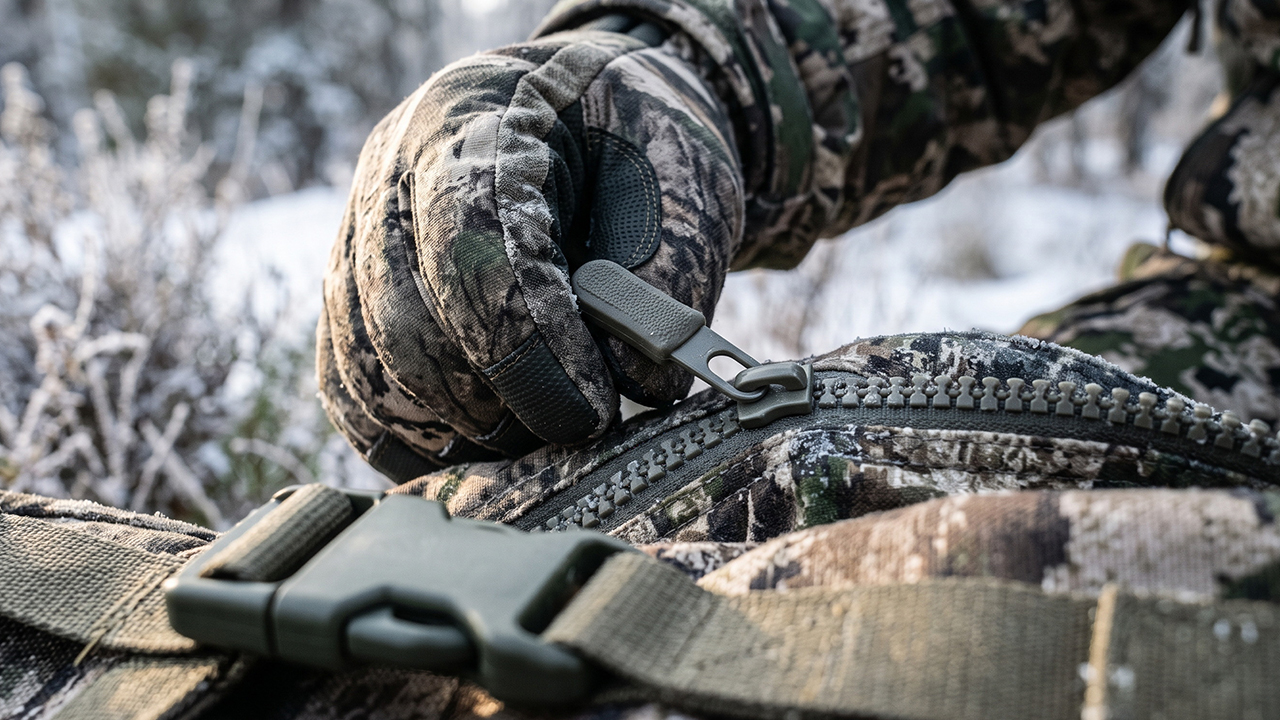
While some designs incorporate magnetic fasteners for quick access, product developers must carefully evaluate the load-bearing capacity and the risk of accidental release. A more common and secure approach is utilizing oversized, cold-resistant polymer buckles (such as specialized POM blends) and verifying their operational ease during the prototyping phase.
In winter environments, especially in snow, stealth is a functional requirement. The friction of standard nylon or polyester Oxford fabrics generates a distinct noise when the wearer moves.
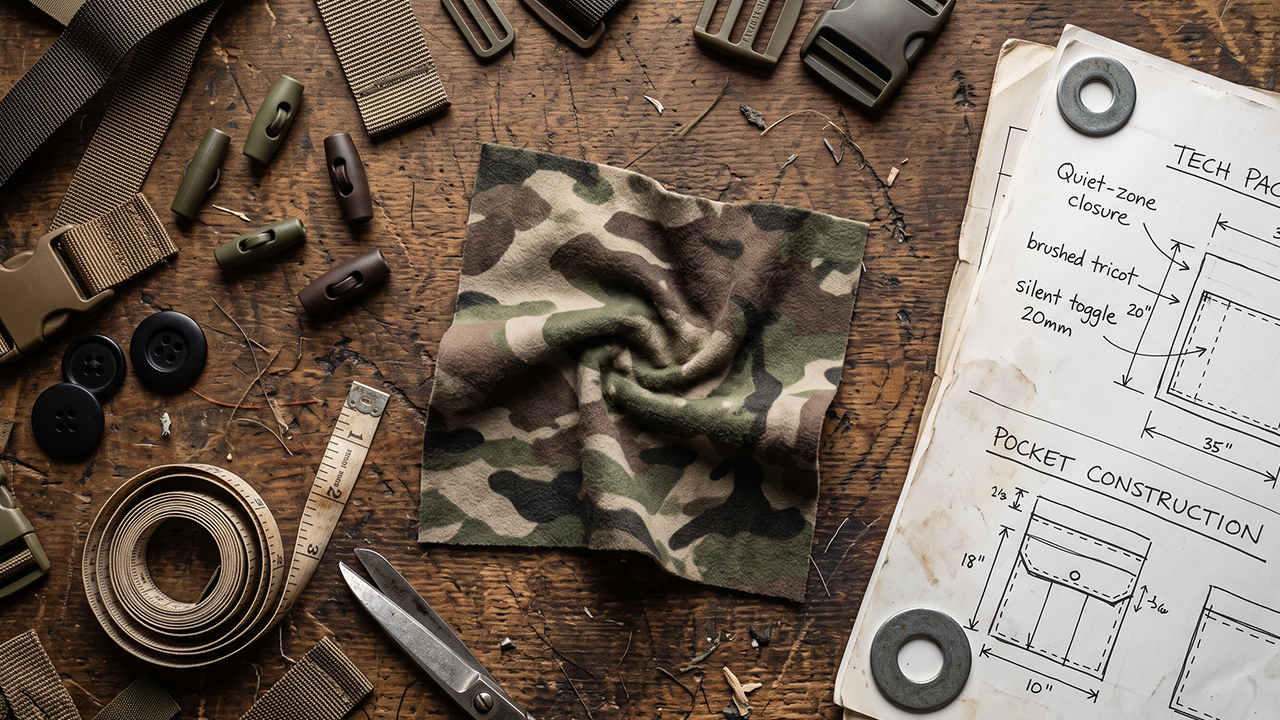
Minimizing this noise requires a deliberate approach to acoustic management during the design phase. While substituting standard outer shells with brushed tricot, micro-fleece exteriors, or soft-shell materials is a standard starting point, the fabric name alone does not guarantee a silent product.
From a manufacturing perspective, acoustic performance is often compromised by secondary design choices. For example, noise is frequently generated by the friction between a soft outer shell and a stiff internal lining. Additionally, standard hook-and-loop fasteners (Velcro) create loud tearing sounds that are disruptive in a hunting environment. Designers should evaluate alternative closures, including covered hook-and-loop systems, fabric tabs, low-noise toggles, and other suitable fastening methods. The final choice should balance operating noise, secure fastening, ease of use with gloves, and durability. Finished samples should be assessed during realistic handling and movement tests.
When developing a new line of cold-weather gear, balancing various performance requirements is a core part of the OEM process. Evaluating the following design elements early in development can help optimize the final product:
Evaluating Zippers for Cold-Weather Usability: While heavy-duty airtight waterproof zippers offer maximum weather protection, they can sometimes require higher operating force, especially in freezing conditions. A high-quality standard reverse-coil zipper protected by a fabric storm flap often serves as an effective alternative. Buyers may want to weigh operating force, glove compatibility, and weather resistance to determine the best zipper configuration for the product's specific target temperature.
Assessing Hardware Material Tolerances: Standard plastic hardware, such as side-release buckles, may naturally lose elasticity as temperatures drop. To ensure reliable performance in freezing environments, product developers might consider evaluating and specifying cold-resistant polymer blends during the design phase to help maintain hardware flexibility and strength.
Balancing Insulation and Moisture Management: For insulated gear, retaining heat is the primary goal, but internal moisture management is also a factor for active use. Incorporating adequate ventilation or breathable linings can help manage sweat accumulation during active tracking, supporting overall comfort when the user transitions to stationary periods.
Heated outdoor products have become a valuable addition to cold-weather equipment lines. (Note: For a detailed breakdown of wearable heated apparel, see our dedicated guide on Hunting Heated Vests.) However, one of the most functional yet complex items to manufacture is the heated hunting seat cushion.
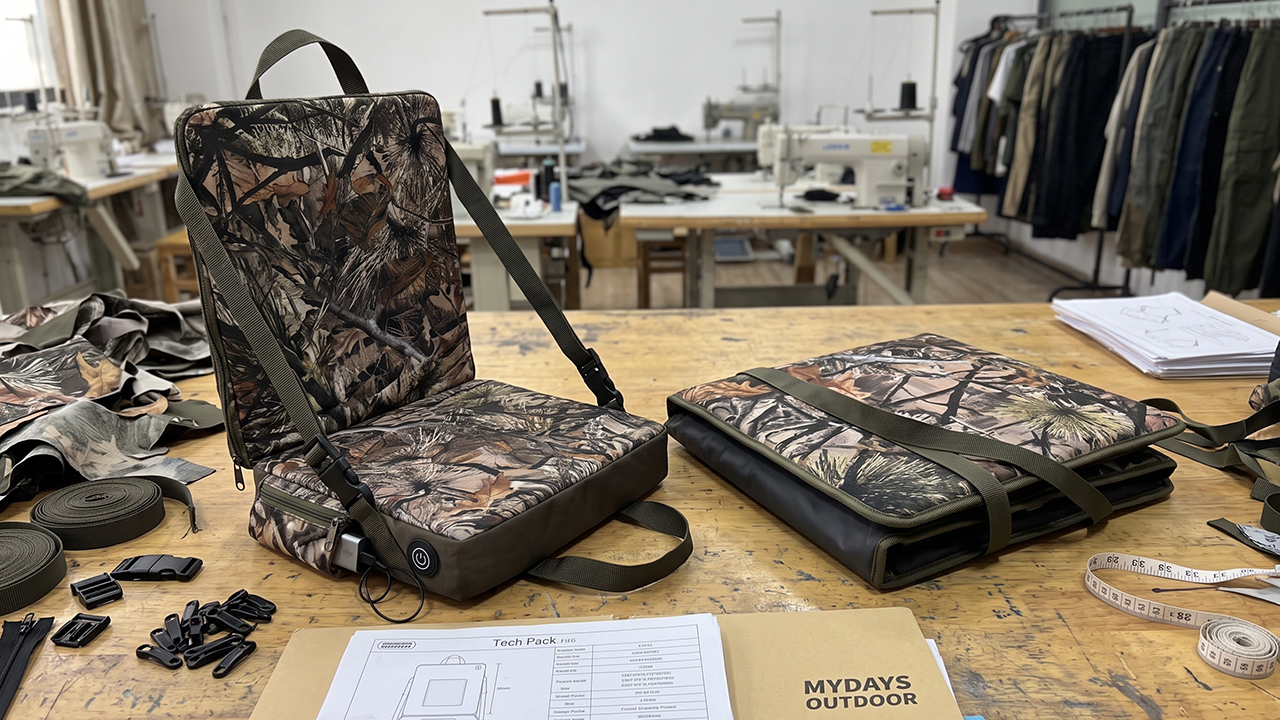
Unlike heated apparel, a seat cushion must repeatedly withstand the full body weight of the user while protecting delicate internal electronics. Transitioning a standard hunting seat into a heated electronic accessory introduces unique manufacturing challenges:
Heating Element Durability Under Compression: Product developers should select heating elements rated for the intended bending, compression, and usage conditions. The complete cushion assembly should be tested for heating consistency, electrical integrity, and durability under repeated loading. Element selection should be based on verified performance rather than material type alone.
Structural Layering and Heat Management: The cushion construction should balance insulation, comfort, moisture protection, and load distribution. Depending on the design, a closed-cell foam layer such as EVA may help reduce heat loss toward the ground. The heating element, insulation, and outer layers should be evaluated together to confirm temperature distribution, comfort, and performance under repeated compression.
Battery Placement and Safety: A lithium-ion power bank cannot be placed beneath the seating area. Manufacturers typically design a reinforced pocket outside the load-bearing zone. Battery compartments should protect the power source from moisture, accidental impact, and compression while allowing convenient access. The completed product should be evaluated for electrical safety, temperature control, wiring protection, and foreseeable misuse under its intended operating conditions.
Bringing a cold-weather product to market requires a reliable and structured manufacturing process. For outdoor brands sourcing OEM gear, the typical workflow includes:
Design & Tech Pack Review: Evaluating product specifications, material preferences, and hardware requirements to confirm manufacturing feasibility.
Prototyping & Sampling: Translating 2D designs into physical samples, allowing brands to conduct their own field testing and performance validation.
Mass Production & Quality Control: Finalizing pre-production samples and moving into bulk manufacturing, with standard QC inspections to ensure consistency across the order.
This straightforward approach helps ensure the final gear meets the specific performance and quality standards of the target market.
Successful winter hunting gear balances rugged durability with specialized cold-weather protection. Whether you are looking to hunting backpacks, custom heated seat cushions, or expand your broader cold-weather equipment line, the Mydays Outdoor manufacturing team is available to review your tech packs, discuss specialized fabric options, and evaluate structural solutions.
Share your product concept or reference samples with us to discuss the next steps in your OEM development project.
