You are here:Home » News » Custom Bag Logo Options: A B2B Guide to Embroidery, Printing, Patches & Labels
Custom Bag Logo Options: A B2B Guide to Embroidery, Printing, Patches & Labels
Views: 0 Author: Site Editor Publish Time: 2026-09-17 Origin: Site
Selecting the right logo application for an OEM bag project can affect the product's appearance, durability, production cost, and overall brand presentation. For procurement managers and private label brands partnering with a manufacturer like Mydays Outdoor, a logo is not just an aesthetic choice; it is a manufacturing specification that should align with the underlying fabric, order volume, and intended outdoor environment.
This guide evaluates the five primary branding methods used in wholesale bag manufacturing to help you engineer the most effective tech pack for your budget.
Logo Application Comparison Matrix
Application Method
Appearance & Finish
Typical Durability
Typical Cost Level
Typical MOQ Consideration
Artwork Complexity
Suitable Fabrics
Embroidery
Textured, classic, premium
High
Medium
Low
Low to Medium
600D+ Oxford, Canvas
Screen Printing
Flat, matte, high-contrast
Medium to High
Low
Medium
Medium
Smooth Oxford, Nylon
Heat Transfer
Smooth, exact graphics
Medium
Low to Medium
Low
High
Smooth Nylon, Polyester
Silicone/PVC Patch
3D, modern, technical
High
High (Tooling Fee)
High
Medium to High
All (Sewn-on)
Woven Label
Heritage, subtle, low-profile
High
Low (per unit)
High
Low to Medium
All (Sewn-in)
1. Embroidery: A Durable, Textured Branding Option
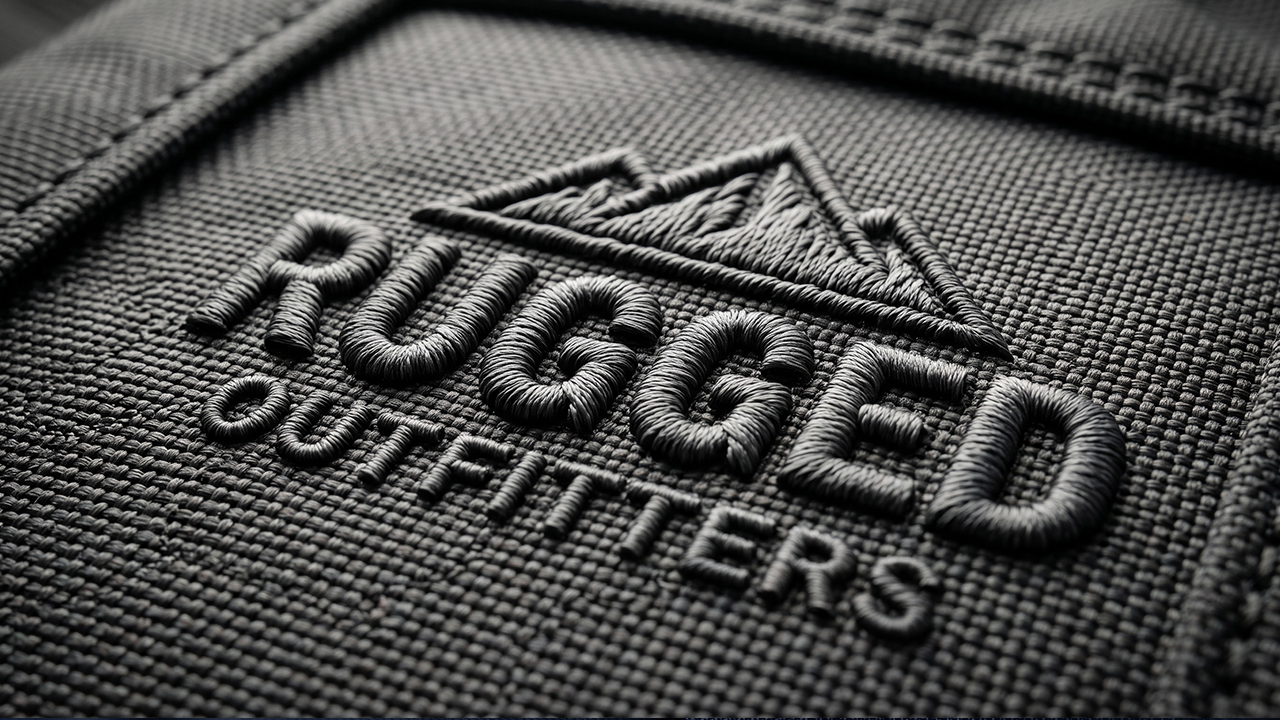
Direct embroidery involves stitching the logo directly into the bag’s fabric using automated multi-head commercial sewing machines.
Appearance: Provides a dimensional, high-quality aesthetic. 3D embroidery (which uses a foam underlay) can create an even more pronounced, raised texture.
Durability: Embroidery generally provides good resistance to abrasion and repeated use when properly applied.
Cost & MOQ: Pricing is determined by "stitch count" rather than the number of colors. Setup costs (digitizing the logo file) are low, making it highly flexible for lower MOQ corporate gifting orders.
Limitations: It struggles with extremely fine text or micro-details. On lightweight fabrics such as 210D ripstop nylon, embroidery may cause puckering or distortion if the design, backing, thread tension, and stabilizer are not properly selected. Because embroidery creates needle penetrations, it can affect the water resistance of the fabric panel. For products requiring higher water resistance, the construction and sealing method should be evaluated during product development.
2. Screen Printing (Silk Screening)
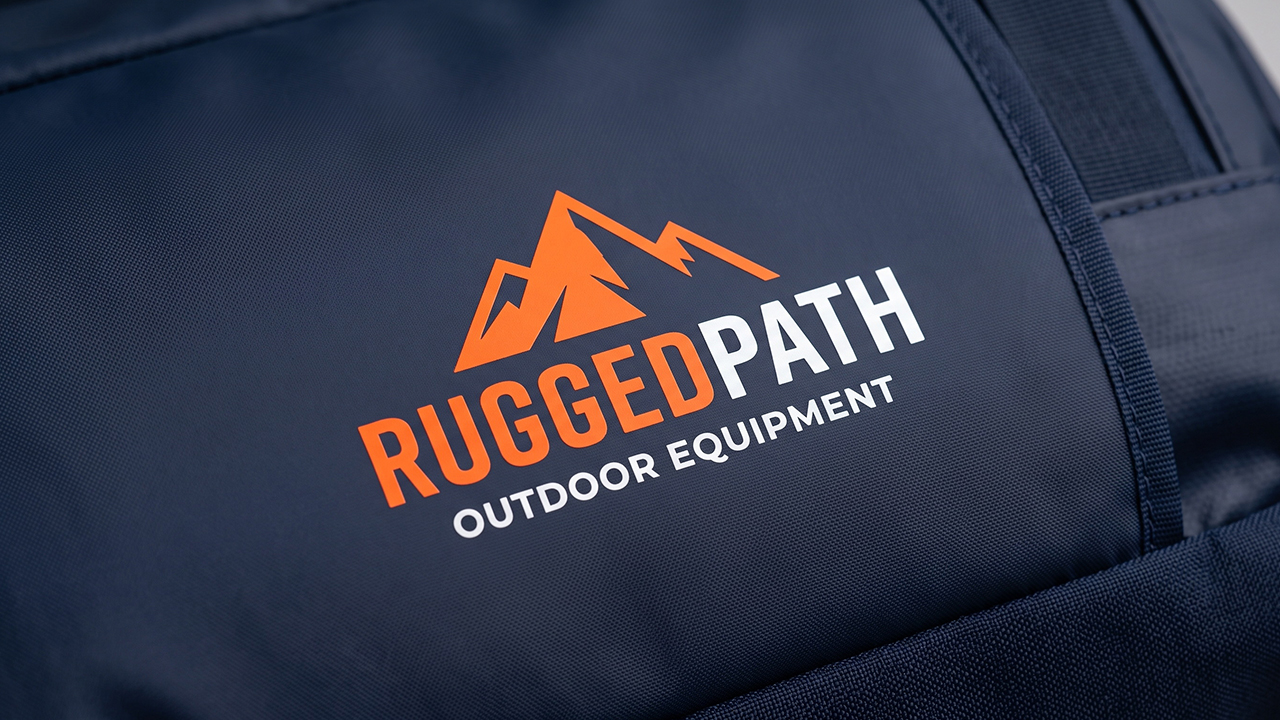
Screen printing forces ink through a custom-made mesh stencil directly onto the fabric, applying one color at a time.
Appearance: Delivers a flat, clean, and highly visible logo. Screen printing can be specified using Pantone references to help achieve consistent brand colors, although the final appearance can vary depending on the fabric and ink system.
Durability: High-quality plastisol or water-based inks bond well with synthetic fibers, offering good long-term wear depending on environmental exposure.
Cost & MOQ: Highly cost-effective for large bulk orders. Because each color requires a separate mesh screen setup, it is most economical for 1- or 2-color logos manufactured at higher volumes, ranging from standard promotional totes to a custom inflatable travel seat cushion.
Limitations: Cannot reproduce photographic gradients. Waxed or heavily treated fabrics can make direct screen printing more difficult because the surface treatment may interfere with ink adhesion.
3. Heat Transfer
Heat transfer (or thermal transfer) involves digitally printing a logo onto a specialized carrier film, which is then bonded to the fabric using controlled heat and pressure.
Appearance: Heat transfer is well suited to detailed artwork, gradients, small text, and multi-color graphics that may be difficult to reproduce through traditional screen printing or embroidery. The finish is smooth and sits slightly on top of the fabric.
Durability: Depending on the transfer material, fabric, washing conditions, and application process, edges may become more susceptible to lifting or peeling over time.
Cost & MOQ: Very accessible for low-MOQ runs because it bypasses the expensive screen setup process.
Limitations: Heat presses operate at high temperatures. Fabrics with low melting points or certain waterproof PVC coatings—such as those commonly used on inflatable seat cushions—can warp or melt during application if not carefully monitored.
4. Silicone & PVC Patches
Rubber-like patches can be produced using materials such as silicone or PVC, depending on the required appearance, flexibility, durability, and cost. The material is formed using a dedicated mold and then attached to the bag, commonly by sewing or other suitable attachment methods.
Appearance: Delivers a highly modern, tactical, and rugged 3D appearance. It is an excellent choice for tactical gear, heavy-duty duffels, or a specialized Camo Fishing Backpack.
Durability: These patches are generally resistant to abrasion and moisture and can work well for products that require a more rugged visual style. The finished patch itself can offer good resistance to moisture, but overall water resistance depends on the attachment method and the construction of the bag panel.
Cost & MOQ: Custom tooling is normally required for a molded patch, which adds an initial tooling cost and development step. This makes it less viable for very small runs but highly economical when amortized across large OEM production volumes.
5. Woven Labels
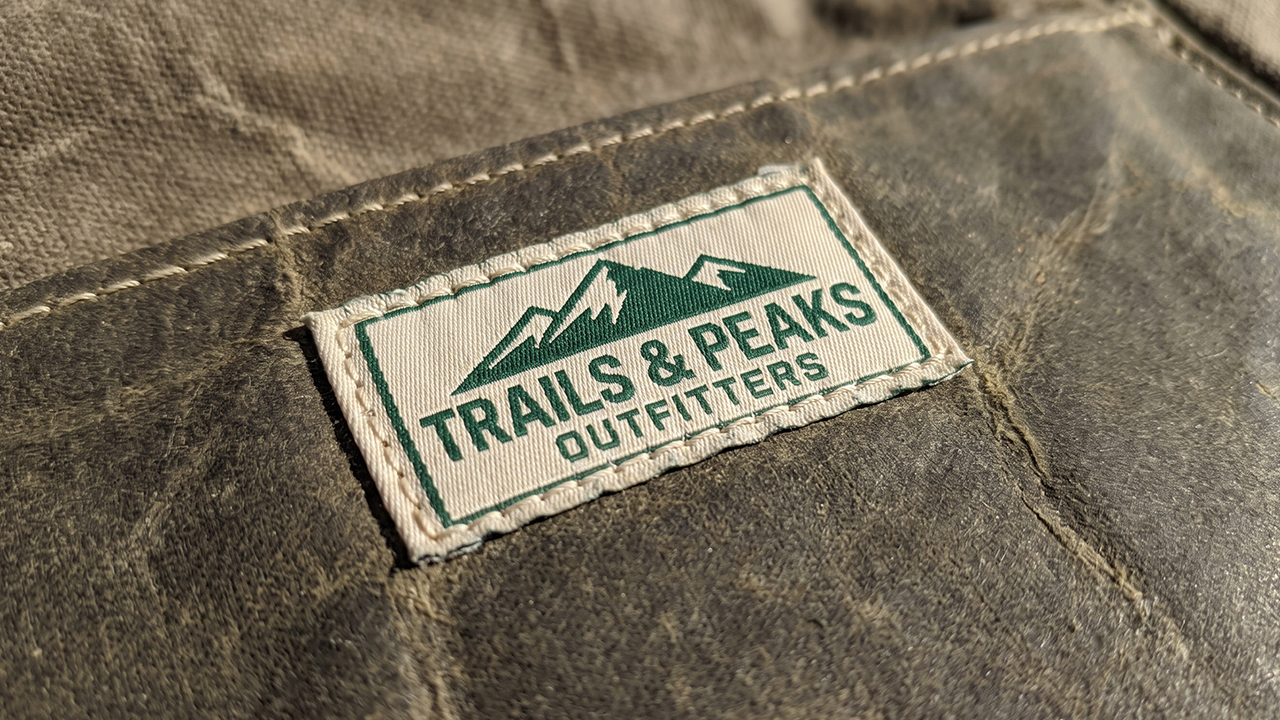
Rather than printing or stitching directly onto the bag, the logo is woven on a jacquard loom using fine polyester threads to create a standalone fabric tag. This tag is then sewn flat onto the bag's surface or folded into a structural seam.
Appearance: Minimalist, sophisticated, and retail-ready. It provides the classic "heritage" look commonly used by premium outdoor and lifestyle brands. It is also an ideal low-profile branding solution for wearable outdoor accessories, such as heated winter gloves, where a large rigid logo would compromise flexibility.
Durability: Woven labels do not crack or peel, providing excellent longevity.
Cost & MOQ: Minimum quantities vary by label supplier, size, construction, and artwork complexity. Because the setup cost is spread across the order, woven labels tend to become more cost-efficient at larger quantities.
Limitations: Very fine details and gradients can be difficult to reproduce, so simplified artwork usually produces better results.
Choosing the Right Logo Placement
Logo placement directly impacts the manufacturing process and the final user experience. Common locations include the front panel, side panel, shoulder strap, pocket, top handle, and interior label.
Placement depends on visibility, fabric structure, seam location, abrasion, and functionality. For example, avoid placing large rigid patches directly on areas that need to flex frequently, such as the folding seams of an Inflatable Seat Cushion. Likewise, ensure heavy embroidery is not placed on load-bearing seams where it might weaken the structural integrity of the gear.
Artwork Requirements for OEM Bag Branding
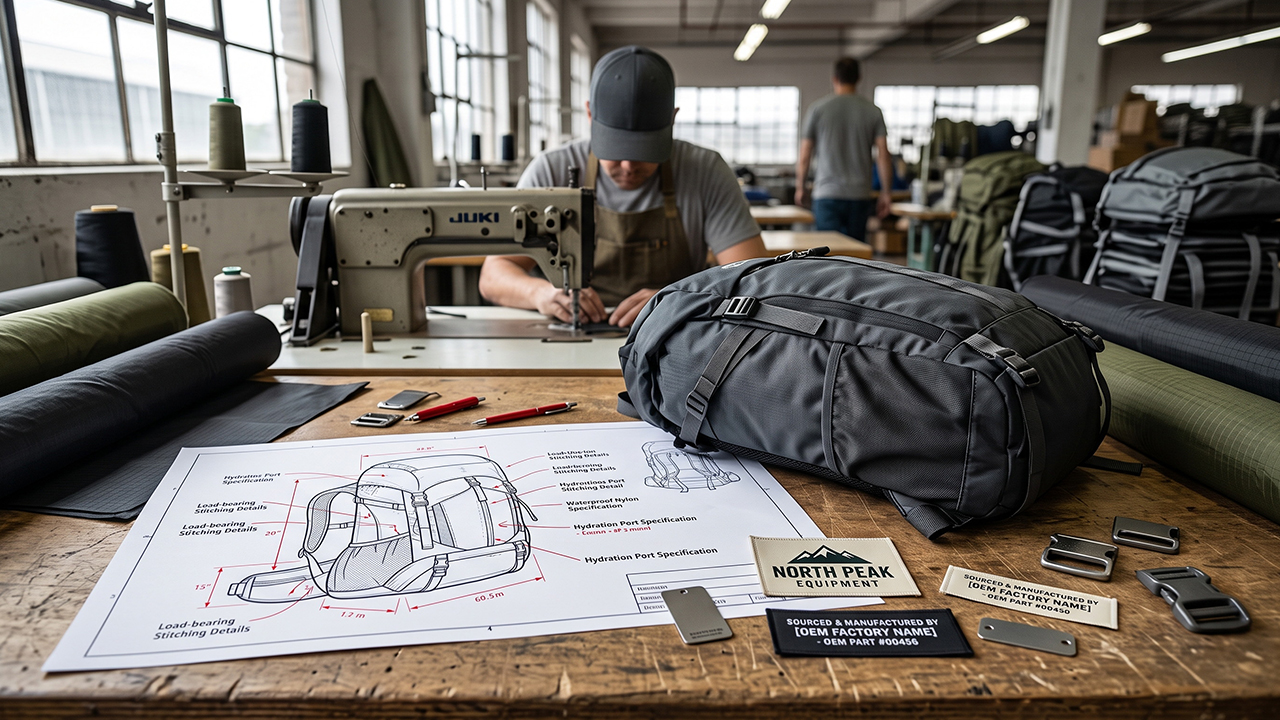
To ensure an accurate transition from digital design to physical product, procurement teams must provide proper artwork files to the factory.
Vector Files (AI, EPS, PDF, SVG): Vector artwork is preferred for embroidery digitization, screen preparation, molded patches, and other production applications because it can be scaled without losing edge definition.
Raster Files (PNG, JPG): Only recommended as visual references or for specific digital heat transfer applications.
Your tech pack should always specify logo dimensions, Pantone references, color codes, exact placement, background requirements, minimum text size, and specific embroidery thread colors if applicable.
Which Logo Application Should You Choose?
Need a textured, durable logo? → Embroidery
Need a simple 1–2 color promotional logo? → Screen Printing
Need gradients or detailed artwork? → Heat Transfer
Want a dimensional technical look? → Silicone/PVC Patch
Want a subtle sewn-in brand label? → Woven Label
For OEM projects, the final choice should be based on the fabric, artwork, expected use, order quantity, target cost, and required appearance rather than the branding method alone.
What B2B Buyers Should Confirm Before Production
Before approving a custom bag logo, confirm these details with your manufacturing partner:
Logo application method
Artwork format and dimensions
Logo colors or Pantone references
Exact placement
Base fabric and surface treatment
Sample approval requirements
Unit cost and tooling/setup costs
MOQ
Packaging and labeling requirements
Every custom project has unique requirements, and finding the right balance between design, fabric, and cost often requires careful evaluation. The Mydays Outdoor manufacturing team is happy to review your artwork and share our production experience. Contact us to discuss feasible branding methods, compare estimated costs, and explore how we might assist with your next bag project.